


GE DS215TCQAG1BZZ01A: Reliable Analog I/O Board for Mark V Turbine Control Systems
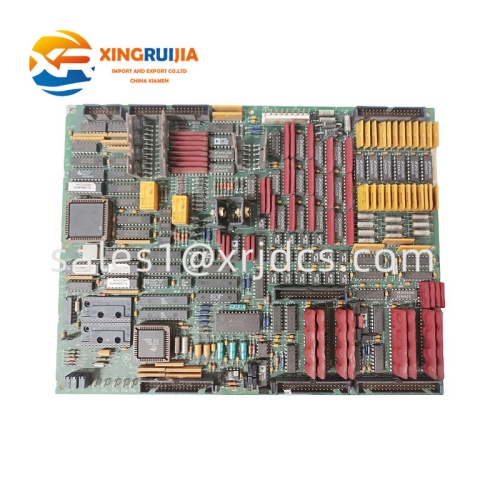
1. Product Overview: Precision Signal Processing for Turbine Automation
In modern power generation facilities, turbine control systems must process a large amount of field information to maintain stable operation, improve equipment efficiency, and protect critical machinery. Accurate signal acquisition and reliable communication between control components are therefore essential. General Electric (GE) developed the Mark V Speedtronic control platform to address these demanding industrial requirements.
The GE DS215TCQAG1BZZ01A is an Analog I/O Board designed for the GE Mark V LM turbine control system. Identified by the functional acronym TCQA, this electronic board performs important signal scaling, conditioning, and processing functions within the turbine control architecture.
It receives signals associated with different field devices and prepares them for use by the control system. These signals include LVDT inputs, thermocouple measurements, vibration signals, voltage signals, and 4–20 mA analog inputs and outputs. In addition, it supports signal handling associated with servo valve control and generator-related measurements.
For industrial facilities operating gas or steam turbines, maintaining reliable analog signal processing is important for operational stability. This makes the board a valuable component in long-term Mark V system maintenance.
2. Technical Specifications and Product Identification
The following information provides an overview of the component and its general configuration.
Parameter | Description |
|---|---|
Brand | General Electric (GE) |
Model | DS215TCQAG1BZZ01A |
Functional Acronym | TCQA |
Product Type | Analog I/O Board |
Product Series | Mark V LM |
System | Speedtronic Turbine Control |
Main Function | Analog Signal Conditioning |
Signal Types | LVDT, 4–20 mA, voltage, thermocouple |
Connectors | Six 34-pin and two 40-pin connectors |
Diagnostic Indicators | Six LEDs |
Reference Manual | GEH-6195 |
The board is part of the Mark V distributed control architecture. Its hardware configuration includes multiple connectors, diagnostic indicators, and electronic components that support communication with other boards in the system.
3. How Does the TCQA Board Support Turbine Control?
The TCQA board performs several signal-processing tasks that contribute to the operation of the turbine control system.
Analog Signal Conditioning
Field instruments generate signals in different electrical formats. The board scales and conditions these signals so that the Mark V control processors can use the information appropriately. For example, pressure transmitters and other instrumentation can provide 4–20 mA signals for monitoring important operating conditions.
LVDT Signal Processing
Linear Variable Differential Transformers (LVDTs) are commonly used in turbine systems to measure mechanical position. The board handles associated LVDT signals, supporting position feedback for control applications.
Servo Valve Signal Interface
Servo valve control is important for regulating turbine operating conditions. The board participates in handling related signals, helping the control architecture coordinate actuator operation.
Generator and Line Signal Handling
Through its designated connections, the board exchanges generator and line-related signals with other components, including the TCQC board. This supports the broader electrical monitoring and control functions of the Mark V platform.
4. Hardware Design and Diagnostic Features
The DS215TCQAG1BZZ01A uses a printed circuit board assembly designed for installation within the Mark V control cabinet.
One notable characteristic is its connector arrangement. It includes six 34-pin connectors identified as JA, JB, JD, JE, JG, and 3PL, together with two 40-pin connectors. These interfaces support connections with associated boards and system circuitry.
Furthermore, six LED indicators are arranged in two rows on the board. They provide visual information about operating conditions, diagnostic states, and certain fault conditions. This arrangement helps maintenance technicians perform initial troubleshooting without relying entirely on external diagnostic equipment.
The board also includes configurable hardware jumpers. These allow specific hardware settings to be established according to the system configuration.
5. Industrial Applications
Because of its role in analog signal processing, this component is relevant to industrial facilities that depend on GE Mark V turbine control systems.
Typical application environments include:
Gas Power Plants: Processing turbine instrumentation signals associated with temperature, pressure, and actuator operation.
Steam Turbine Facilities: Supporting signal acquisition and control coordination in turbine installations.
Oil and Gas Industry: Contributing to reliable turbine-driven equipment operation.
Petrochemical Plants: Supporting turbine control infrastructure in continuous production environments.
Industrial Power Generation: Helping maintain the signal-processing functions required by established turbine automation systems.
In these applications, electronic board failures can affect equipment availability. Therefore, maintaining suitable replacement components is an important part of industrial maintenance planning.
6. Installation and Maintenance Recommendations
When replacing this board, technicians should carefully verify the complete part number, revision information, and compatibility with the existing Mark V configuration.
Several maintenance practices can help reduce installation risks:
Confirm connector positions before disconnecting existing cables.
Follow appropriate electrostatic discharge protection procedures.
Inspect connectors and circuit-board surfaces for visible damage.
Verify hardware jumper settings against the original configuration.
Check diagnostic LED indications during system testing.
Follow GE technical documentation and site-specific safety procedures.
In particular, ribbon cables should be identified before removal to reduce the possibility of incorrect reconnection.
7. Why Source GE Automation Spare Parts from Our Company?
Finding reliable replacement boards for established turbine control systems can be challenging, especially when certain products become obsolete or difficult to obtain.
Our company specializes in industrial automation spare parts and provides components for customers in power generation, steel production, petrochemical processing, hydropower, and other industrial sectors.
We offer several advantages:
Extensive Experience: Long-term experience in industrial automation and control equipment.
Large Inventory: A broad selection of GE, ABB, Emerson, Siemens, and other automation components.
Competitive Pricing: Cost-effective solutions for industrial maintenance requirements.
Hard-to-Find Products: Support for rare, discontinued, and obsolete spare parts.
Quality Assurance: Attention to product identification and quality inspection.
15-Day Replacement Support: Free replacement within 15 days for confirmed quality problems, subject to applicable service terms.
Our product range includes turbine control boards, PLC modules, DCS components, communication cards, power modules, and industrial electronic assemblies.
8. Conclusion
The GE DS215TCQAG1BZZ01A is an important Analog I/O Board within the Mark V LM turbine control platform. Its signal conditioning capabilities, multiple connection interfaces, and diagnostic indicators support the processing of essential turbine instrumentation signals.
For facilities maintaining existing GE Speedtronic systems, selecting the correct replacement board is important for preserving equipment compatibility and operational continuity.
Our company is committed to supplying industrial automation spare parts with competitive prices, quality assurance, and professional service. Whether you require commonly used GE control boards or rare Mark V components, we aim to provide dependable support for your industrial maintenance needs.