


GE IC200CHS022 VersaMax Compact I/O Carrier: Reliable Wiring and Modular PLC Integration
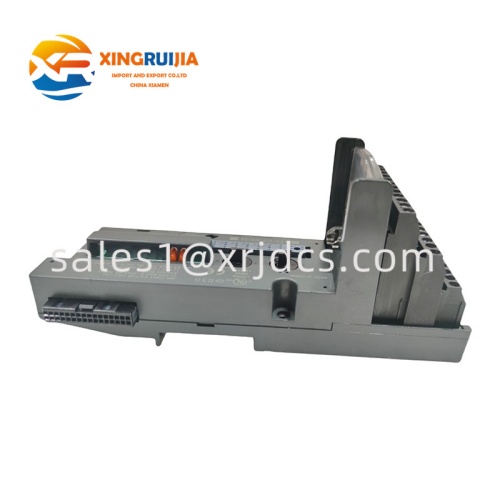
Industrial automation systems depend on a stable connection between control electronics and field devices. While PLC CPUs and I/O modules perform the main processing tasks, the carrier and terminal infrastructure provides the physical foundation that allows those modules to connect with field wiring. The GE IC200CHS022 is a compact I/O carrier designed for the GE Fanuc VersaMax automation platform. It combines module mounting, backplane communication, and field-wiring termination in a practical integrated design.
For factories maintaining VersaMax PLC systems, this type of carrier can be an important maintenance component. A reliable carrier supports secure module installation and provides an organized connection point for sensors, actuators, power circuits, and other field equipment. Its compact construction also makes it suitable for control cabinets where efficient use of panel space matters.
A Foundation for VersaMax I/O Modules
The carrier does not function as a conventional standalone PLC I/O module. Instead, it provides the mechanical and electrical interface required by a compatible VersaMax I/O module. GE documentation describes this compact box-style carrier as providing mounting, backplane communications, and field wiring for one I/O module.
This design gives the VersaMax platform a modular architecture. Engineers can install the appropriate I/O module for the application while using the carrier as the connection point between the module and the field wiring.
Such modularity is useful in manufacturing systems because different production processes often require different combinations of digital and analog signals. A carrier-based architecture allows the control system to accommodate these requirements without relying on one fixed I/O configuration.
Integrated 36-Terminal Connection Structure
One of the key characteristics of this compact carrier is its integrated terminal arrangement. GE documentation identifies 36 IEC box-style terminals. The terminals provide the connection points required for field wiring and power-related connections associated with the installed I/O module.
The terminal structure also helps technicians organize wiring inside the control cabinet. Clear terminal identification can simplify installation and make later troubleshooting more systematic.
Some product documentation identifies the terminal arrangement as A1–A18 and B1–B18, providing a total of 36 screw-type connection points. Third-party technical listings also describe the carrier as supporting up to 32 I/O points together with four common power connections.
This makes the carrier particularly useful when an installation requires multiple field connections while still maintaining a relatively compact cabinet layout.
Compact Design for Control Cabinets
Industrial control cabinets often contain PLC processors, power supplies, communication equipment, terminal blocks, circuit protection devices, and numerous I/O modules. Space therefore becomes an important engineering consideration.
The carrier uses a compact vertical arrangement. GE documentation lists dimensions of approximately 66.8 mm wide, 163.5 mm high, and 70 mm deep, excluding the height associated with the DIN rail.
Its vertical module orientation helps maintain an organized arrangement within the cabinet. The carrier can also be installed using DIN-rail mounting, making it suitable for standard industrial control-panel construction.
For maintenance teams working with established VersaMax installations, retaining the original carrier architecture can also simplify replacement work because technicians do not need to redesign the entire field-wiring arrangement.
Local Box-Style Wiring
The product belongs to the local box-style connection category. GE's controller documentation identifies the field termination as integrated and the wiring termination style as local box.
This approach provides a direct connection between field wiring and the carrier. It eliminates the need for a separate terminal interface for many standard installation arrangements.
For commissioning engineers, integrated termination can reduce the number of individual components inside the cabinet. It also provides a clearly defined location for checking field connections during troubleshooting.
When replacing an existing carrier, technicians should carefully document each wire before removal. Correct terminal identification is important because the carrier serves as the physical connection point for the associated I/O module.
Modular Replacement Advantages
The VersaMax platform was designed around modular I/O architecture. GE documentation describes several types of VersaMax carriers and notes that the platform provides flexibility for wiring and module installation.
This modular approach can be particularly valuable when maintaining production equipment over a long service life.
If an I/O module needs to be replaced, the carrier provides the physical mounting and wiring interface. This can help maintenance personnel replace the electronics while preserving the established cabinet wiring arrangement.
The carrier therefore plays an important role even though it does not perform the logic-processing function of the PLC CPU.
Electrical and Wiring Considerations
Several third-party technical sources list the carrier with a terminal rating of up to 2 A per point and 8 A for power or ground connections, together with a voltage rating reaching 264 VAC and a 300 VAC transient rating.
These figures should be treated as application-level reference information rather than a substitute for the applicable GE documentation and the specifications of the installed I/O module.
Wiring compatibility is another important consideration. Available documentation describes support for individual solid or stranded conductors within specified AWG ranges, while two-wire arrangements may require a different conductor size.
Before installation, engineers should verify the exact wiring requirements for the particular I/O module being used. The carrier and module should be considered as a complete system rather than as independent components.
Suitable Applications Across Industrial Automation
A compact I/O carrier can support a wide range of industrial control applications because it serves as the interface between field devices and VersaMax I/O modules.
Typical environments include:
- Manufacturing machinery
- Automated production lines
- Packaging equipment
- Material handling systems
- Process control panels
- Water and utility systems
- Factory monitoring systems
- Conveyor control
- Building and facility automation
- General machine control
The specific application depends on the I/O module installed on the carrier. Digital input, digital output, analog input, and analog output functions can be implemented according to the requirements of the automation system.
Maintenance of Existing VersaMax Installations
Legacy PLC systems often remain in operation because they continue to provide reliable control for established production equipment. In these environments, individual spare components can become increasingly important.
A carrier failure may affect the physical connection between an I/O module and the field wiring even when the installed electronic module remains functional. Mechanical damage, terminal problems, corrosion, or connection faults can therefore justify carrier replacement.
Keeping a spare carrier available can reduce maintenance delays. It also allows technicians to replace the affected hardware without immediately redesigning the PLC architecture.
When sourcing a replacement, users should compare the product identification, revision, terminal arrangement, mounting configuration, and associated I/O module. GE-related product listings also show multiple hardware revisions of this carrier, so the exact installed version should be checked before procurement.
Why Correct Carrier Selection Matters
A carrier may appear to be a simple mechanical component, but its role in the PLC system is more significant. It provides the connection between the installed I/O electronics, backplane communication, and external field wiring.
Using an incorrect carrier can therefore create compatibility or installation problems. Before replacement, maintenance personnel should verify:
- VersaMax system compatibility
- Carrier connection style
- Terminal arrangement
- Module orientation
- Mounting method
- Field wiring requirements
- Hardware revision
- Associated I/O module
This verification process can help prevent unnecessary downtime and ensure that the replacement fits the existing control architecture.
Our Industrial Automation Supply Service
Our company specializes in supplying industrial automation components for customers maintaining existing PLC, DCS, drive, control, and instrumentation systems. We provide a wide range of modules, I/O carriers, communication components, power supplies, controllers, interface boards, and other automation spare parts.
For customers searching for GE Fanuc or VersaMax components, our team can assist with product identification based on model numbers, photographs, nameplate information, and existing system configuration.
We also support customers who need rare, discontinued, or difficult-to-source industrial automation parts. This is particularly useful for facilities that continue to operate legacy control systems and need replacement components without replacing the entire automation platform.
Our company focuses on competitive pricing, quality assurance, and responsive supply support. For quality-related problems, we provide a 15-day replacement commitment, helping customers reduce the risk associated with purchasing industrial automation spare parts.
Final Thoughts
The GE VersaMax compact carrier provides a practical foundation for modular I/O installation. Its integrated 36-terminal structure, backplane communication capability, vertical module arrangement, and local box-style field termination make it a useful component for established VersaMax PLC systems. GE documentation specifically identifies the carrier as a solution for mounting, backplane communication, and field wiring for one I/O module.
For industrial maintenance teams, the value of this component lies in its ability to preserve an existing wiring and I/O architecture. When a carrier requires replacement, verifying the exact configuration and hardware revision before procurement can help ensure a smooth installation.
Our company can provide sourcing support for GE Fanuc VersaMax components and other industrial automation spare parts, helping customers maintain reliable control systems and reduce unnecessary production interruptions.