

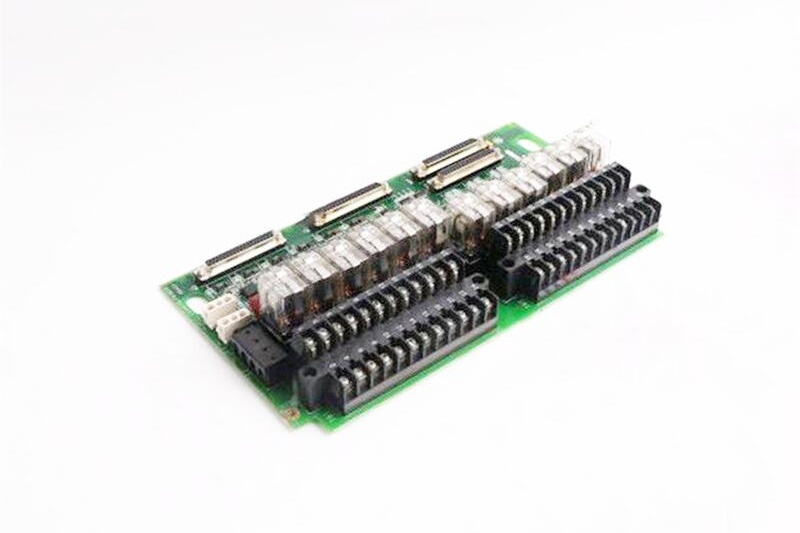
GE IS200TREGH1BEC: The Regulator at the Heart of Synchronous Machine Control
Introduction
Within the specialized and demanding ecosystem of power generation and heavy industrial drives, control of the synchronous machine—the generator or large synchronous motor—is paramount. This task falls to a dedicated, high-performance regulator. The GE IS200TREGH1BEC is precisely such a device: a critical control board within the Mark VIe Speedtronic™ family, specifically engineered for excitation and voltage regulation. Moving beyond interface modules, we now examine the "brain" responsible for one of a power plant's most vital control loops: maintaining generator terminal voltage and system stability.
Module Identity & Core Function: An Excitation Regulator Controller
The IS200TREGH1BEC is a TREGH Excitation Regulator Controller board. The "TREGH" denotes its specific functional role, while "1B" and "EC" indicate hardware revisions and compliance markings. It is not a passive I/O card; it is an intelligent controller that executes complex, high-speed control algorithms. Its primary mission is to regulate the output voltage of a synchronous generator by precisely controlling the current fed to its rotor field winding (the excitation system).
Key Technical Deep Dive: Architecture & Capabilities
Dedicated Processing: The board is built around a powerful digital signal processor (DSP) or high-speed microprocessor, optimized for executing real-time control algorithms with deterministic, sub-millisecond loop times. This is essential for maintaining grid stability during disturbances.
Core Control Algorithms: It runs sophisticated software implementing:
Automatic Voltage Regulator (AVR): The primary control loop. It compares the generator terminal voltage (VT) feedback against a setpoint and adjusts the field current output to maintain voltage, regardless of load changes.
Power System Stabilizer (PSS): A critical stability enhancement function. It damps low-frequency power oscillations (0.2-2.0 Hz) by modulating the AVR setpoint using inputs like generator speed or power.
Limiters and Protections: Integral functions include field current limiters (FCL), stator current limiters (SCL), and under-excitation limiters (UEL) to protect the generator and excitation system within their capability curves.
Redundancy & Reliability: In critical applications, TREGH boards are configured in Triple Modular Redundant (TMR) systems. Three identical TREGH boards operate in parallel, with a 2-out-of-3 voting logic on all outputs (field current commands) to ensure continued operation despite a single board failure. The "H" in TREGH may signify its qualification for high-availability, redundant configurations.
Input/Output Integration: The board receives its analog inputs (VT, CT, field current) and discrete statuses via dedicated Signal Interface Boards (like the previously discussed SNIDH) over the internal PDH (Peer-to-Peer Data Highway) backplane. Its control outputs are sent as commands to the firing circuits of the thyristor-based static exciter or to a power converter.
Integration within the Mark VIe Turbine/Generator Control System
The TREGH is the centerpiece of the excitation control cabinet. Its typical integration looks like this:
Field Signals: Generator voltage, current, speed, and breaker status are conditioned by I/O packs and sent to the TREGH.
Control Execution: The TREGH runs its AVR/PSS algorithms at high speed.
Output Command: It sends a firing angle command to the SCR Gate Driver board (e.g., an IS200FILLx board).
System Communication: It exchanges data with the Unit Controller (like a URxH board) and the HMI/Engineering Station (ToolboxST) over the UDH/PDH networks for supervision, setpoint changes, and diagnostics.
Typical Application Scenario: Grid-Connected Gas Turbine Generator
For a GE Frame 7FA gas turbine generator set:
The IS200TREGH1BEC continuously adjusts the generator field current to hold the terminal voltage at 15.75kV (or other rated voltage) as the grid load fluctuates.
During a grid fault causing voltage dip, the PSS function acts to provide positive damping torque, preventing the rotor angle from swinging wildly and losing synchronism.
If a sensor fails, the TMR architecture masks the fault, allowing the unit to remain online for planned maintenance.
Maintenance, Configuration & Critical Considerations
Engineering Tool: The controller is exclusively configured and tuned using GE's proprietary ToolboxST software. This includes setting AVR gains, PSS parameters, limiter setpoints, and configuring redundancy.
Tuning & Modeling: Proper tuning requires system knowledge and often relies on a validated generator/excitation system model. Incorrect tuning can lead to poor voltage response or even induce instability.
Firmware & Version Control: Firmware updates are applied via ToolboxST. Absolute compatibility between the TREGH firmware, the I/O pack firmware, and the overall system version is mandatory.
Diagnostics: ToolboxST provides extensive diagnostic pages showing real-time control variables, alarm/event logs, and board health status. Advanced tools can record oscillographic traces of dynamic events for post-disturbance analysis.
Handling: This is a highly sensitive ESD component. It must be handled with care, stored in anti-static bags, and only installed by trained personnel.
Conclusion: The Guardian of Grid Voltage and Stability
The GE IS200TREGH1BEC is more than a circuit board; it is a specialized control engineer encapsulated in silicon and software. Its performance directly impacts power quality, generator asset protection, and the stability of the interconnected grid. For control engineers in the power generation sector, mastering the principles and practices surrounding this regulator is not just technical expertise—it is a critical responsibility for ensuring reliable and stable electrical supply.